Floors, stairs & finishes
Carpet us vinyl flooring in your basement.
✅ What carpet does well for — and where it fails
👍 Carpet’s strengths
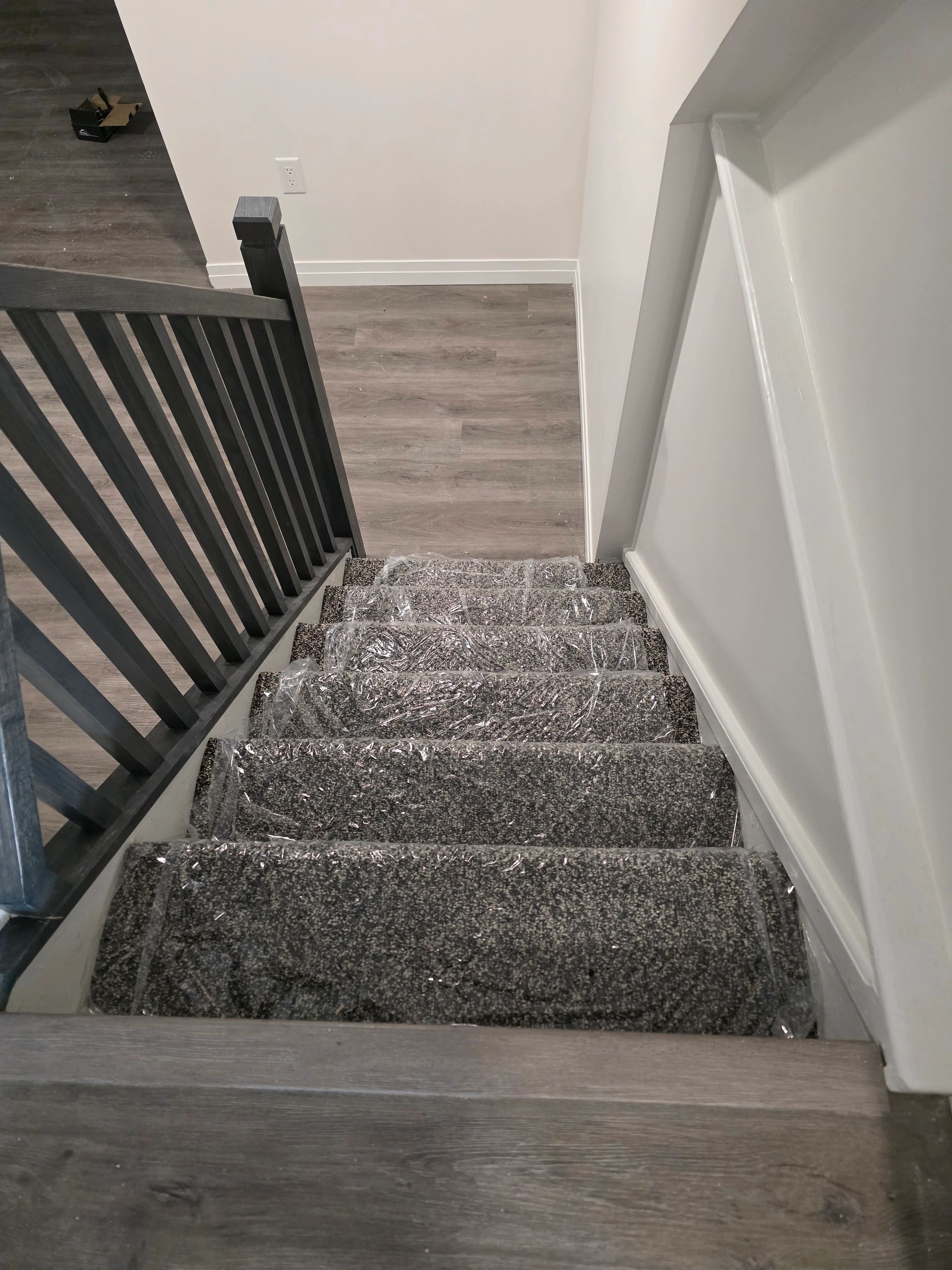
Comfort & warmth underfoot — Carpet is soft, warm, and cozy. That makes it nice for basements used as living spaces: e.g. family rooms, media rooms, kids’ playrooms, guest bedrooms, etc. It’s more pleasant to walk or sit on than hard floors.
Noise reduction / acoustics — Carpet absorbs sound better than hard floors, reducing echo and making a basement feel more “homey” and less cavernous.
Insulation & comfort in cold basements — Basements can be cooler (especially concrete floors), and carpet adds some insulation relative to bare concrete or vinyl.
Cost-effective (sometimes) — Basic carpet, especially synthetic low-pile, can be relatively inexpensive depending on quality and installation, compared to premium waterproof flooring or complex flooring systems.
👎 Carpet’s drawbacks (especially in a basement)
Moisture risk: mold, mildew, odors — Basements are often humid, prone to leaks, seepage, or even flooding. Carpet + padding traps moisture, which can lead to mold or mildew — a serious downside.
Hard to clean & maintain — Carpet traps dust, allergens, and if water gets in, will likely require deep cleaning or full replacement.
Shorter lifespan under damp conditions — In moisture-prone basements, carpet often needs replacement more frequently.
Potential resale / hygiene concerns — For buyers, basement carpet often raises red flags (concerns about past water issues, mold, etc.).
Bottom line for carpet: it can be a good choice — but only if your basement is reliably dry, well-waterproofed, well-insulated, and you accept more maintenance and risk. Using carpet tiles or removable rugs instead of wall-to-wall carpet can mitigate some risks.
✅ What vinyl (or vinyl plank / LVP / LVT) does well — and where it falls short
👍 Strengths of vinyl in basements
Water and moisture resistance — Modern vinyl plank (especially waterproof LVP/LVT or sheet vinyl) handles humidity, spills, even minor leaks better than carpet. That makes it far more reliable if your basement is at all prone to dampness.
Durability, longevity, and easier maintenance — Vinyl resists scratches, stains, and wear; it usually lasts longer than carpet in basement conditions. Cleaning is simple (sweeping and mopping) compared with vacuuming and deep-cleaning carpet.
Flexible appearance & style options — Vinyl planks come in a wide variety of looks (wood, stone, tile, etc.), so you don’t lose design aesthetic even while getting durable, practical flooring.
Better for resale, fewer water-related worries — Vinyl makes a basement more resilient to moisture, which is often a priority for inspectors or future buyers.
Lower maintenance burden — Spills, dirt, pet messes — all are easier to clean and don’t lead to trapped moisture like with carpet.
👎 Vinyl’s drawbacks / trade-offs
Feeling cold or hard underfoot — Without proper underlayment or insulation, vinyl can feel colder and less cozy than carpet — especially on concrete basement floors. Experts Remodel+1
Subfloor prep matters a lot — Vinyl needs a fairly flat, dry, and stable subfloor. Uneven concrete, moisture infiltration, or poor prep can lead to issues over time. Kozak Reno+1
Less “homey” / soft feel — While vinyl can mimic hardwood/tile visually, it won’t give the same cushioned comfort as carpet. Kacey's Carpet & Tile+1
Potential environmental / indoor-air quality concerns — Certain lower-cost vinyl products may emit VOCs or have less sustainable material composition. Flooring Clarity+1
Bottom line for vinyl: It tends to be the safer, more practical choice — especially if there's any chance of moisture, dampness, water events, or heavy usage. With proper subfloor prep and possibly underlayment, vinyl can combine good looks, durability, and lower maintenance.
🎯 Which to choose depends on what you want your basement for
Basement Use / Condition Flooring That Makes More Sense Basement is dry, well-waterproofed, used occasionally for lounging / media / guest room Carpet — for comfort, warmth, sound absorption Basement may be damp, humid, or at risk of leaks / water intrusion (even occasionally)Vinyl plank / LVP (waterproof) — for resilience and easier maintenance High-traffic, multipurpose basement (playroom, laundry area, gym, rec room)Vinyl — durable, easy to clean Cozy, “roomy” basement intended as a bedroom, TV room, or long-term living space (with reliable moisture control)Carpet (if you accept the maintenance/risk) or vinyl + rugs/underlayment for a balance Concern for resale value, low maintenance, low maintenance hassle Vinyl — less worry about mold/stains, more buyer-friendly in damp-prone homes