
Insulation, fire & electrical
List of smoke alarms used in legal suites
🔥 1. Types of Smoke Alarms
Must meet Canadian standard CAN/ULC-S531 (“Smoke Alarms”).
Installed on or near the ceiling.
If interconnected (see below), they must be devices listed for interconnected installation.
📌 In most basement suite situations, these will be standard smoke alarms — often hard-wired with battery backup — to satisfy both safety and code. (Battery-only is allowed in some older buildings/renovations, but hard-wired with backup is common for legal suites.)
🔌 2. Hard-Wired + Battery Backup (Typical Requirement)
For a basement suite to be legal:
Smoke alarms are typically hard-wired into the home’s electrical system with no disconnect switch — and must have a battery backup so they still work if power fails.
Hard-wiring + battery backup is the standard for new builds and major renovations.
Battery-only alarms may be acceptable in some retrofit/older situations where hard-wiring isn’t feasible, but check with your local building/fire inspector because many municipalities now require hard-wiring for legal suites.
🔄 3. Interconnection
In a house with a basement suite:
- All smoke alarms in the whole building often must be interconnected — so if one goes off (basement or main floor), all alarms sound.
This is especially required when the basement and main dwelling share an exit path or fire separation isn’t a full 30-minute fire-rated barrier.
Interconnection can be done:
Hard-wired (wired between units)
Or wireless interconnection (newer code allows this if installed properly)
📍 4. Placement
At a minimum, smoke alarms must be installed:
In each bedroom (or sleeping room) of the basement suite.
In common spaces outside sleeping areas (e.g., hallway leading to bedrooms).
On every storey of the dwelling unit (so basement level gets a detector).
If your suite has more than one level (e.g., split levels), each level needs a smoke alarm.
🧯 5. Special Considerations
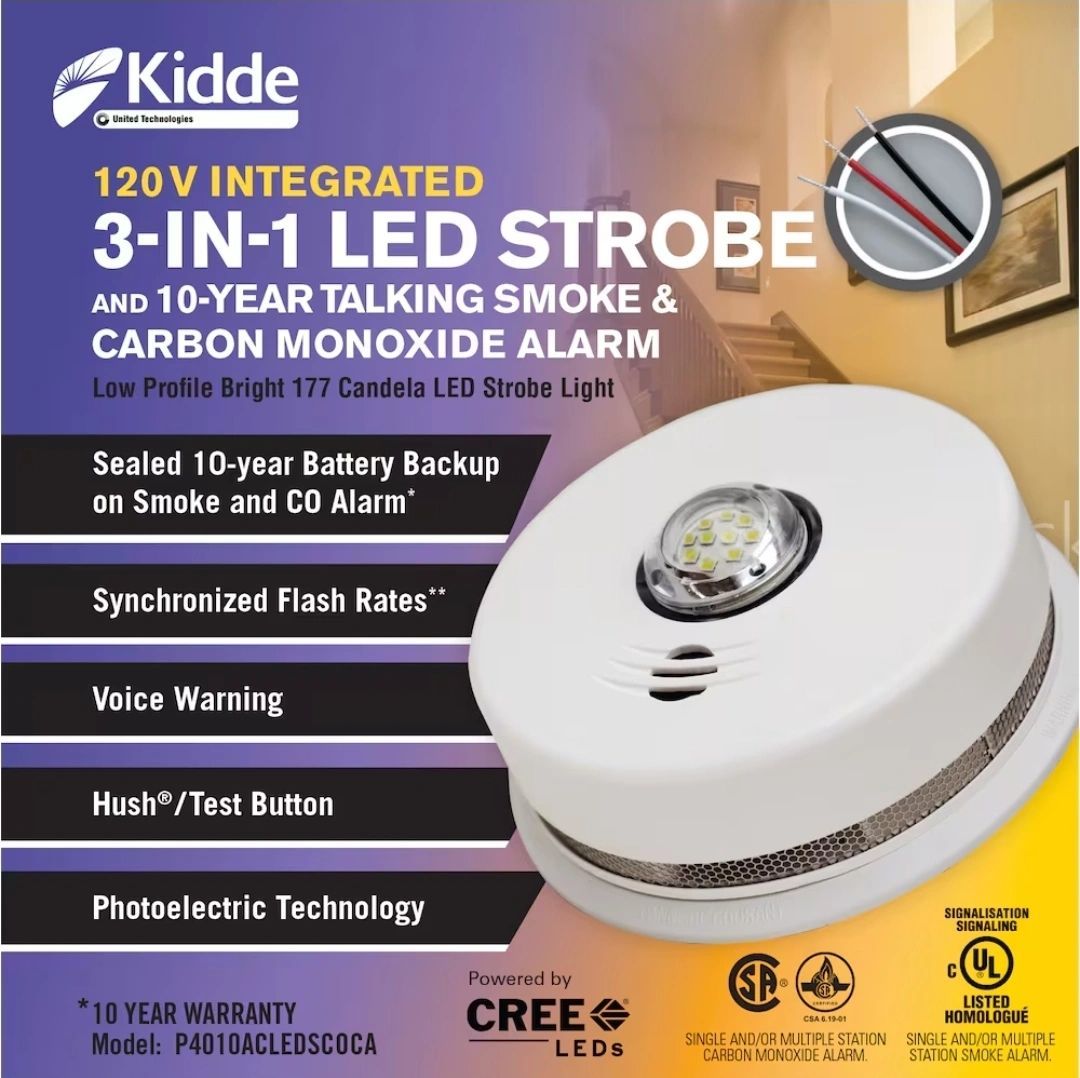
Some municipalities or local fire inspectors may also require a visual signaling component (e.g., strobe light) on smoke alarms, especially in bedrooms — check your local requirements.
Carbon monoxide (CO) alarms are also required near sleeping areas if there are fuel-burning appliances or an attached garage. They can be separate or combo units.
📋 Summary Checklist for a Legal Basement Suite in Ontario
✅ Smoke alarms conform to CAN/ULC-S531 standards. ✅ Installed on/near ceiling in each bedroom and hallway. ✅ Hard-wired to home electrical system with battery backup (typical). ✅ Interconnected with all other smoke alarms in the house. ✅ Audible in bedrooms with doors closed. ✅ CO alarms near sleeping areas if required.
If you want, I can help you figure out exactly what’s required for your specific home (age, existing wiring, and whether it’s already permitted), or help draft a checklist to pass inspection with your local building department. Just tell me more about your setup!