
Insulation, fire & electrical
wood vs metal studs
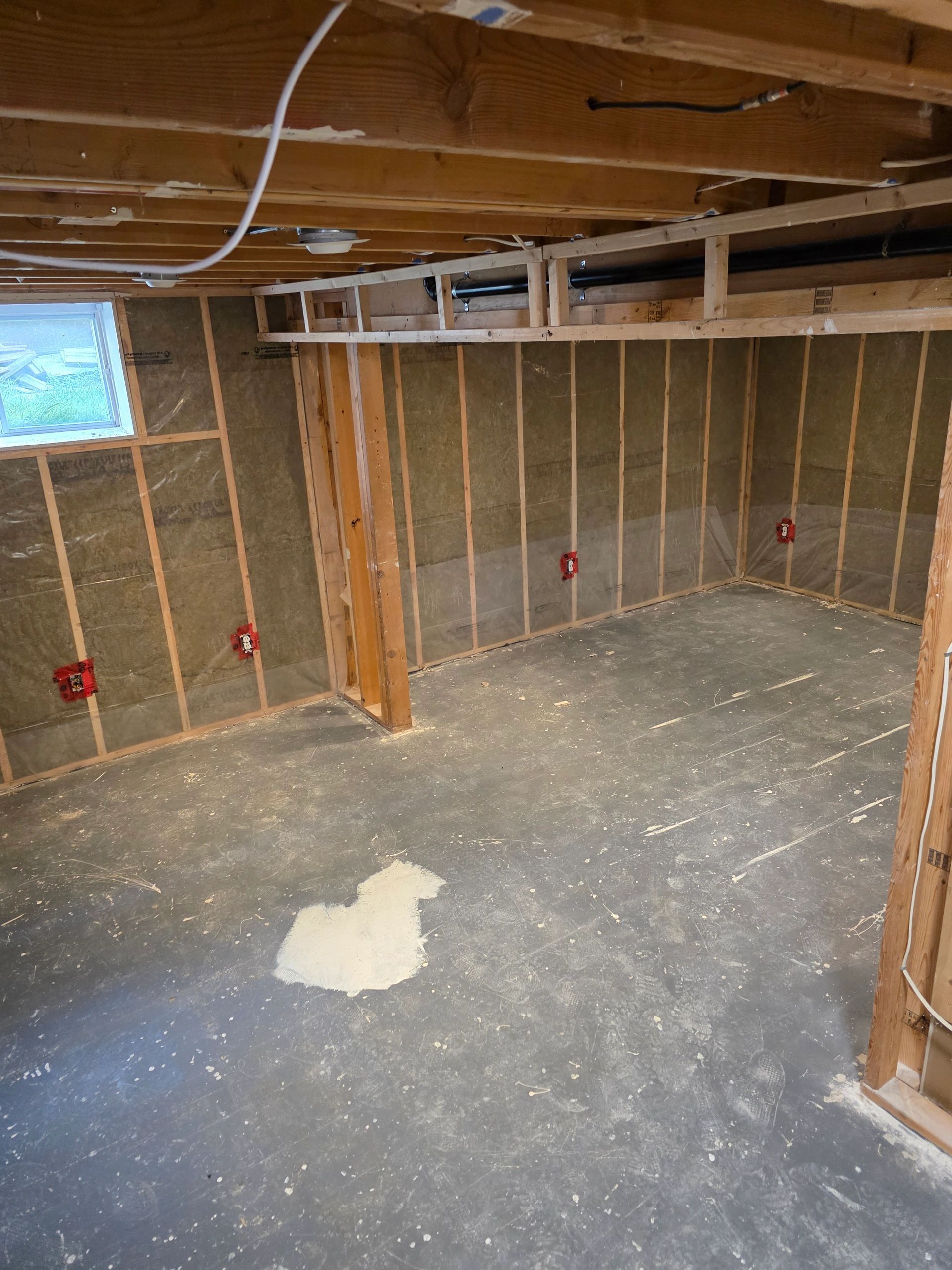
When deciding between wood and metal studs for framing a basement, it comes down to your goals—cost, durability, ease of installation, and moisture resistance. Here's a breakdown:
Wood Studs
Pros: Easier to work with: Can be cut with basic tools; screws and nails go in easily.Stronger for load-bearing: Good for structural walls.Cheaper upfront: Typically lower cost at purchase.Better for mounting: Easier to attach drywall, cabinets, and fixtures.
Cons: Vulnerable to moisture: Can warp, rot, or grow mold if your basement gets damp.Insects: Susceptible to termites or carpenter ants if not treated.Heavier: Can be harder to handle in tight spaces.
Metal Studs
Pros:Moisture-resistant: Won’t rot, mold, or warp—ideal for basements with any humidity.Lightweight: Easier to carry and handle.Straight and uniform: No warping or knots like wood.Fire-resistant: Safer in case of fire.
Cons:Harder to work with: Requires tin snips or power tools; fastening can be trickier.Not for load-bearing (unless you use special structural studs).More expensive overall: Slightly higher material and accessory costs.Poorer for mounting: Needs special anchors or backing for